During a routine monitoring inspection of the Old Wye Bridge in Chepstow on Wednesday, October 1 2025, the council received a recommendation from the consulting bridge engineers to immediately close the bridge to traffic due to signs of structural damage.
Upon inspection, a crack was discovered in the structural beam on Pillar 2. Below, you can view images of the affected area along with a close-up of the identified crack.
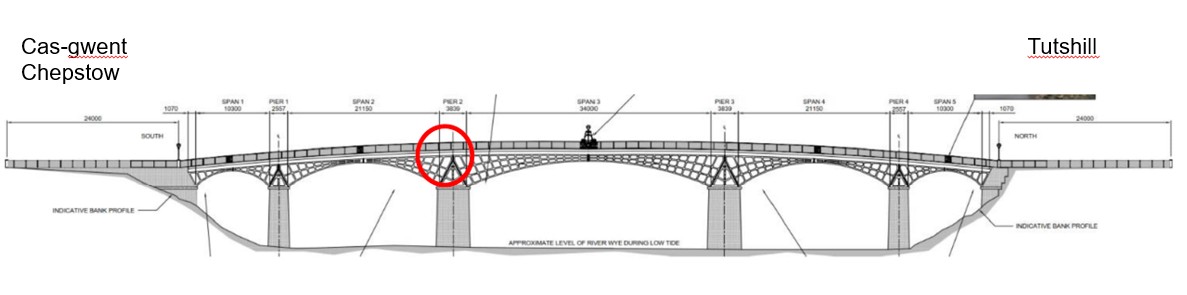
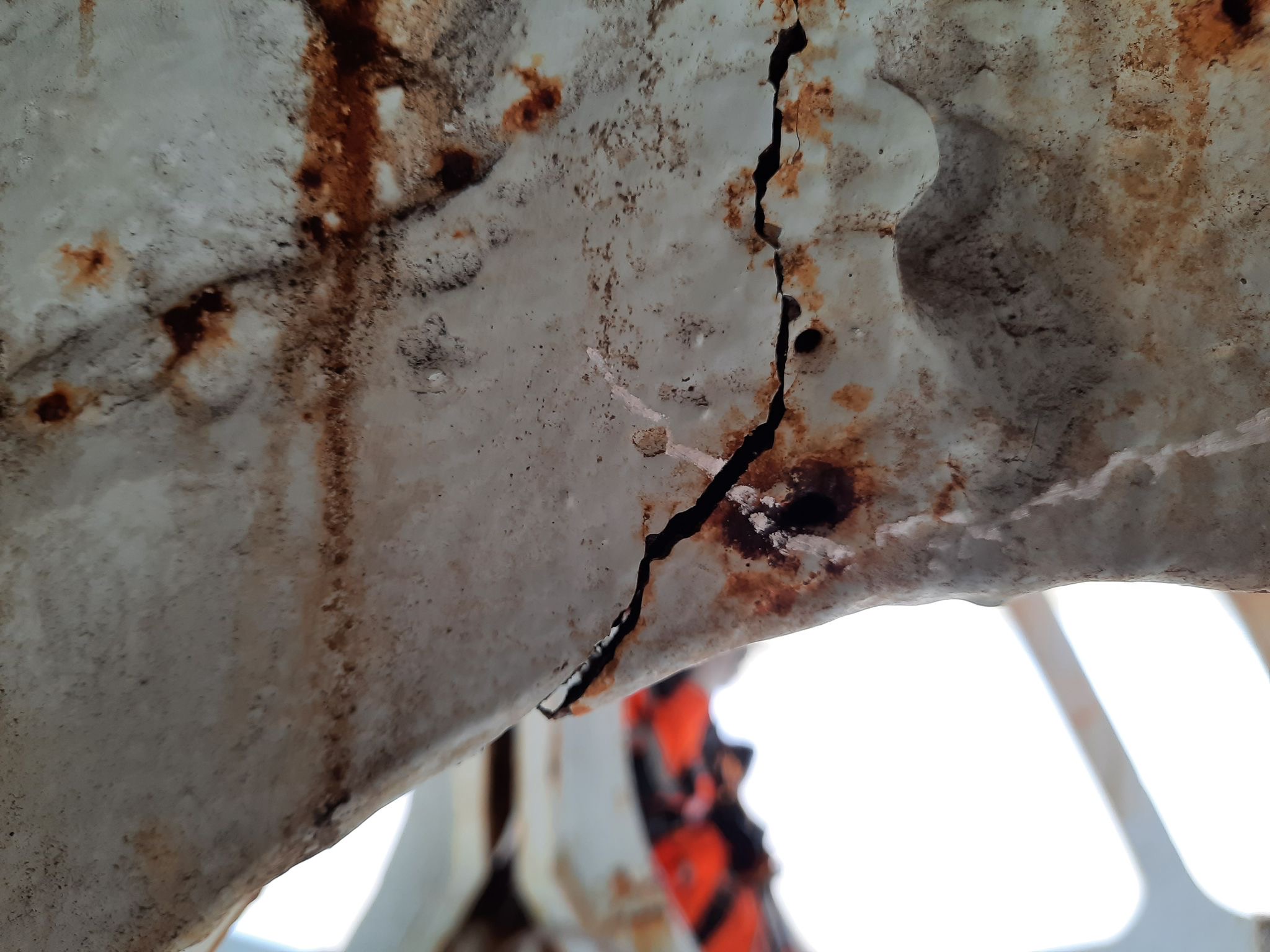
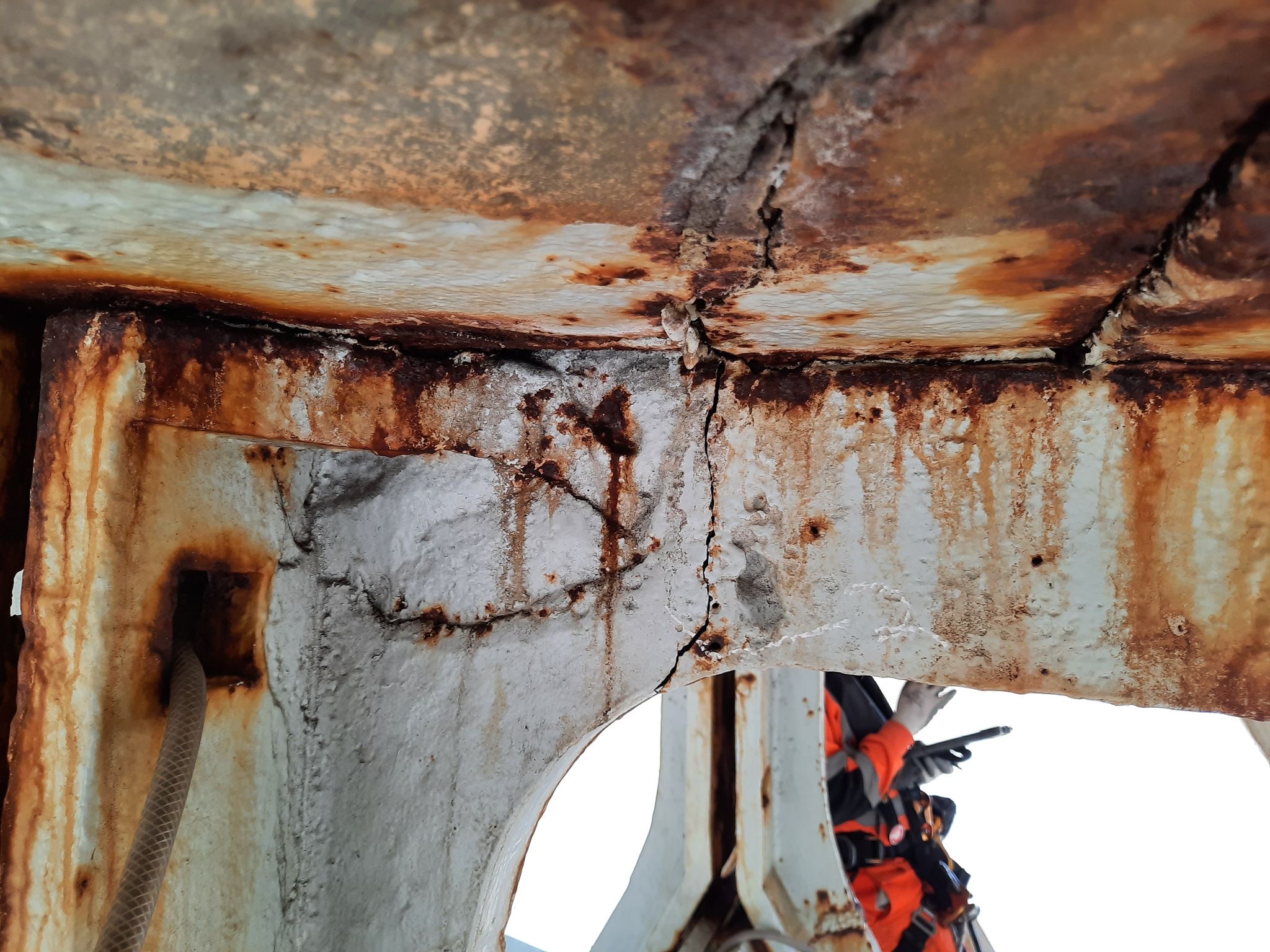
We are currently discussing the next steps with the engineers, but the bridge will be closed for vehicular traffic until further notice.
The Old Wye Bridge, constructed from cast iron, was opened in July 1816. Monmouthshire County Council has continuously monitored the bridge with the assistance of expert engineers since 2018.
We will continue to provide updates to our residents through this page and on our social media platforms.
For further information, please read these Frequently Asked Questions.
How often have inspections taken place?
Inspections have been carried out on the bridge since the 1970s. The bridge is classified as a Sub-Standard Highways Structure and is managed in line with CS470 and CS454. The current monitoring regime is every six months.
How was the decision to close the bridge to traffic taken?
Cracking was first discovered in 2018. At that time, engineers conducted calculations and determined that, while the bridge was sub-standard, it could remain open with a 3 tonne vehicle limit and with additional inspections. However, it was also agreed that the bridge would need to be closed immediately if a new crack was found as this would impact on the loading capacity.
Engineers are now analysing the effect of the new crack on nearby components and considering what further cracking might mean for the bridge’s long-term safety. They are also assessing options for both the medium- and long-term future. Because of the bridge’s age and complexity, independent experts will also review their calculations. This will take time, but it is essential to ensure that we protect the bridge’s users and preserve this historic bridge.
.
Is it safe for pedestrians?
The girders supporting the pavements are not cracked, and pedestrians place far less concentrated loads on the bridge than vehicles do, which is why it remains safe for people to walk over the bridge. However, if people remain stationary and congregate in large groups, they will create the same loading pressures as vehicles, which is why we may have to introduce safety measures to manage pedestrian movements when events are taking place in the town.
Why has the cracking not been picked up before?
Previous inspections have picked up other cracking on the same pillar. The inspection on the 1st October identified a new crack, raising concerns about the structural integrity of this part of the bridge. Previous inspections highlighted that the structural beams were affected by thermal fatigue and vehicular loading. The recent crack is likely linked to the cast iron’s expansion and contraction over the summer months.
Did you know this was coming?
We found cracks in similar areas in 2018. Our engineers decided at the time that the bridge could remain open, but with additional checks. However, it was predicted that temperature cycles would eventually cause more cracks.
Why can’t you weld the crack?
Repair options are being investigated. The structure is a Grade 1 Listed Structure, and all repairs must be carried out to retain its integrity under the Listing. Welding cast iron on a structure like this is not practical, the crack is right through the beam, and in its current position, stresses will be displaced to another section.
Can it be repaired?
We hope so, but safely repairing the bridge will be complicated: repairing the cracks would require either adding new material or pulling the cracked sections back together. Both actions would alter the distribution of forces throughout the surrounding parts of the bridge, potentially shifting the problem to more critical areas. Some repair options would also require consent from Cadw. An additional complication is that modern engineering techniques, such as welding, are not appropriate for cast iron.
How long will the bridge be closed?
We are not able to confirm timescales at this time. Further testing and modelling are needed to establish the extent of the required remedial works. As this is a Grade 1 Listed structure, any works will also need to be approved by CADW.
Is the weight limit on the M48 bridge putting extra traffic on local roads?
We do not have any evidence that the weight limit restrictions have created additional traffic on local roads.
Are you going to pedestrianise the bridge?
The bridge is currently open to pedestrians and cyclists whilst we undertake further investigations. It is our intention to reopen the bridge for vehicular traffic when it is safe to do so.